No products in the cart.
VR Ladder Safety Training (OSHA 1926.1053)
Category Training


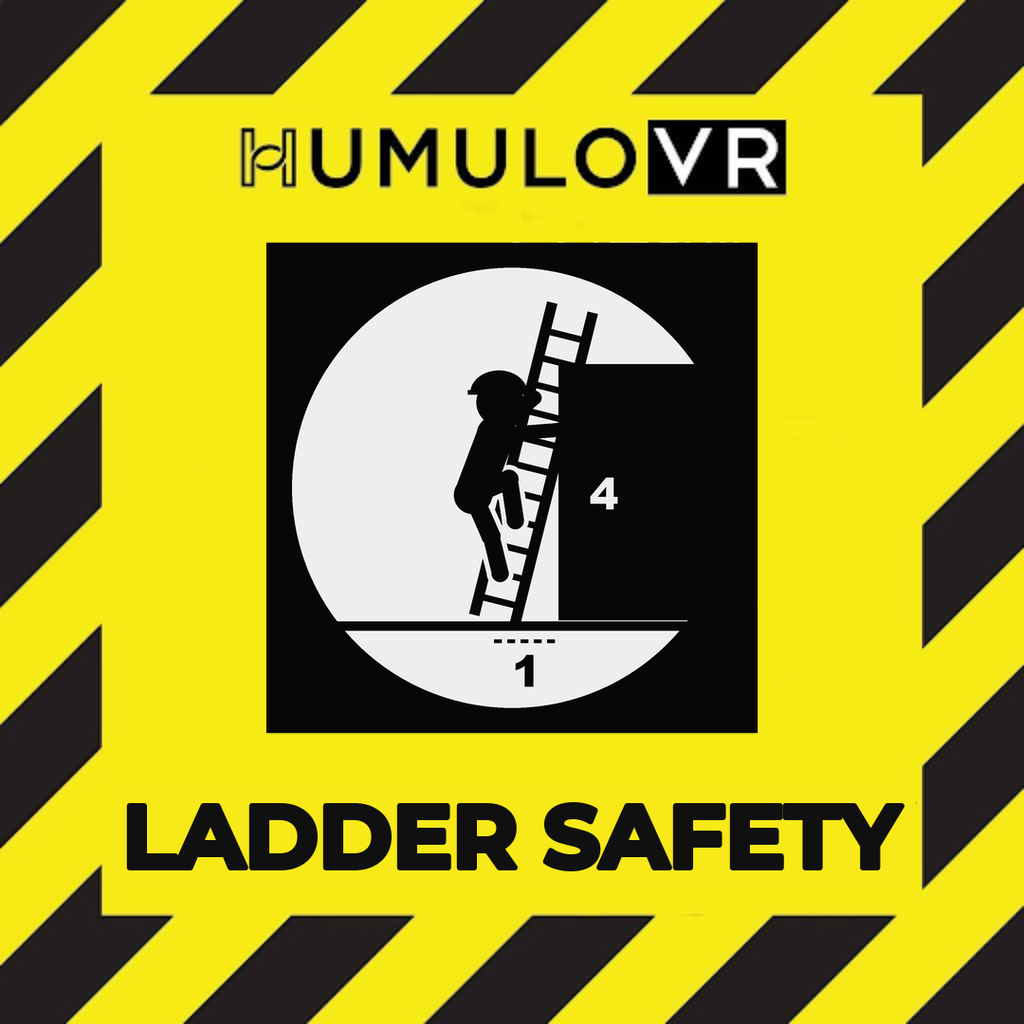
Three lessons on extension ladders in mixed reality: inspect and tag out, set the base at 4:1, extend 3 feet and tie off, then climb with three points of contact. A scored challenge with a different defect every run. Aligned to OSHA 1926.1053.
This is the ladder safety module in Humulo’s OSHA library: three lessons on extension ladders, run in mixed reality in the trainee’s own space. Trainees inspect two ladders and tag the damaged one “Do Not Use”, set the base at 4:1, extend the ladder 3 feet above the landing and tie off the top. Then they climb hand over hand with their tools on their belt, keeping three points of contact. A scored challenge closes it out: choose a safe ladder and a safe spot, with a different defect every time.
| Spec | Detail |
|---|---|
| Format | Mixed reality in the trainee’s own space, single trainee per headset |
| Lessons | Three lessons on extension ladders, then a scored challenge with a different defect every time |
| Core tasks | Inspect and tag out, 4:1 set-up, 3-foot extension and tie-off, climbing with three points of contact |
| Hardware | PICO 4 Ultra Enterprise; the mixed-reality lessons use its full-color passthrough |
| Network | Runs offline once loaded; works on air-gapped and secured sites |
| Group delivery | Multicast kit mirrors a headset to a TV or projector for a classroom |
| Related standards | 29 CFR 1926.1053, 1926.1060 |
| Licensing | Included in the full library on every Humulo headset; every trainee gets their own seat |
It starts with the inspection. Two extension ladders stand in the trainee’s own space, overlaid in mixed reality, and one of them is damaged. The trainee finds the defect and tags that ladder “Do Not Use” so nobody climbs it. Then comes the set-up: the base goes out at 4:1, the ladder is extended so the rails stand 3 feet above the landing, and the top is tied off. Then the climb. The trainee goes up hand over hand with their tools on their belt, not in their hands, and keeps three points of contact the whole way. The challenge at the end is scored: pick a safe ladder and a safe spot for it, and the defect changes on every run, so passing once does not teach the answer.
The tasks come straight out of 29 CFR 1926.1053(b). Paragraph (b)(16) requires portable ladders with structural defects to be marked as defective or tagged “Do Not Use” and withdrawn from service until repaired, and (b)(15) requires a competent person to inspect ladders for visible defects periodically and after any occurrence that could affect their safe use. Paragraph (b)(5)(i) sets the angle for non-self-supporting ladders: the foot sits about one-quarter of the working length out from the top support, which is the 4:1 rule. Paragraph (b)(1) requires the side rails to extend at least 3 feet above an upper landing used for access, or the ladder to be secured at its top to a rigid support with a grasping device. The climbing rules are (b)(20), face the ladder; (b)(21), keep at least one hand on the ladder; and (b)(22), carry nothing that could cost the climber their balance, which is why the tools ride on the belt. The training duty itself is 29 CFR 1926.1060(a): a training program for each employee using ladders, delivered by a competent person, covering the nature of fall hazards, the proper construction, use, placement and care of ladders, and their maximum intended load-carrying capacities. This module carries the hazard recognition and the procedure, and records completion per trainee.
Where it stops: VR cannot inspect your ladders. The inspection your competent person makes on the real ladders on your real site is still required, and so is hands-on practice with the ladder types your crews actually use. Load ratings, ladder types and site-specific tie-off points are yours to cover. OSHA does not certify training products from any vendor, and neither does Humulo claim it does.
This module is not sold on its own. It ships with every Humulo headset as part of the whole library, and every trainee gets their own seat at no extra charge. Humulo publishes its prices, and they are the same numbers quoted to a two-person shop and to a Fortune 100 plant.
| Line item | Published price |
|---|---|
| Trainee seats (full library, this module included) | Unlimited, included with every headset |
| Headset, year 1 | $2,349 |
| Annual headset service, year 2 onward | $750 per headset |
| Account activation, one time | $1,150 |
| Multicast kit (mirror one headset to a TV or projector) | $500 |
| 30-day pilot, 1 headset | $3,499, fully refundable within 30 days |
No multi-year contract, and year-two renewal is optional. Full detail sits on the VR training pricing page.
In construction, 29 CFR 1926.1060(a) requires the employer to provide a training program for each employee using ladders and stairways, delivered by a competent person. It has to cover the nature of fall hazards in the work area, the proper construction, use, placement and care in handling of ladders, their maximum intended load-carrying capacities, and the standards in subpart X.
29 CFR 1926.1053(b)(5)(i) requires non-self-supporting ladders to be set so the horizontal distance from the top support to the foot is about one-quarter of the working length of the ladder. In practice: one foot out at the base for every four feet of working length.
At least 3 feet, under 29 CFR 1926.1053(b)(1), when the ladder is used to reach an upper landing. If the ladder is too short for that, it has to be secured at its top to a rigid support that will not deflect, with a grasping device so the climber can get on and off.
Pricing is per headset, not per trainee. Every trainee gets their own seat with the full Humulo library at no extra cost. Headsets are $2,349 in year one and $750 per headset for service after that. A one-headset 30-day pilot is $3,499 and is fully refundable.
PICO 4 Ultra Enterprise. The lessons run in mixed reality in the trainee’s own space, using the headset’s full-color passthrough, and the module runs offline once loaded.
Every standard behind Humulo’s modules is indexed on OSHA training requirements. Closely related modules: VR scaffolding safety training and fall safety: climbing simulator. The whole catalog is on the VR training module catalog, and the program-level overview is enterprise VR safety training.

© 2026 Humulo Virtual Reality. All rights reserved | Privacy Policy | Terms and Conditions

